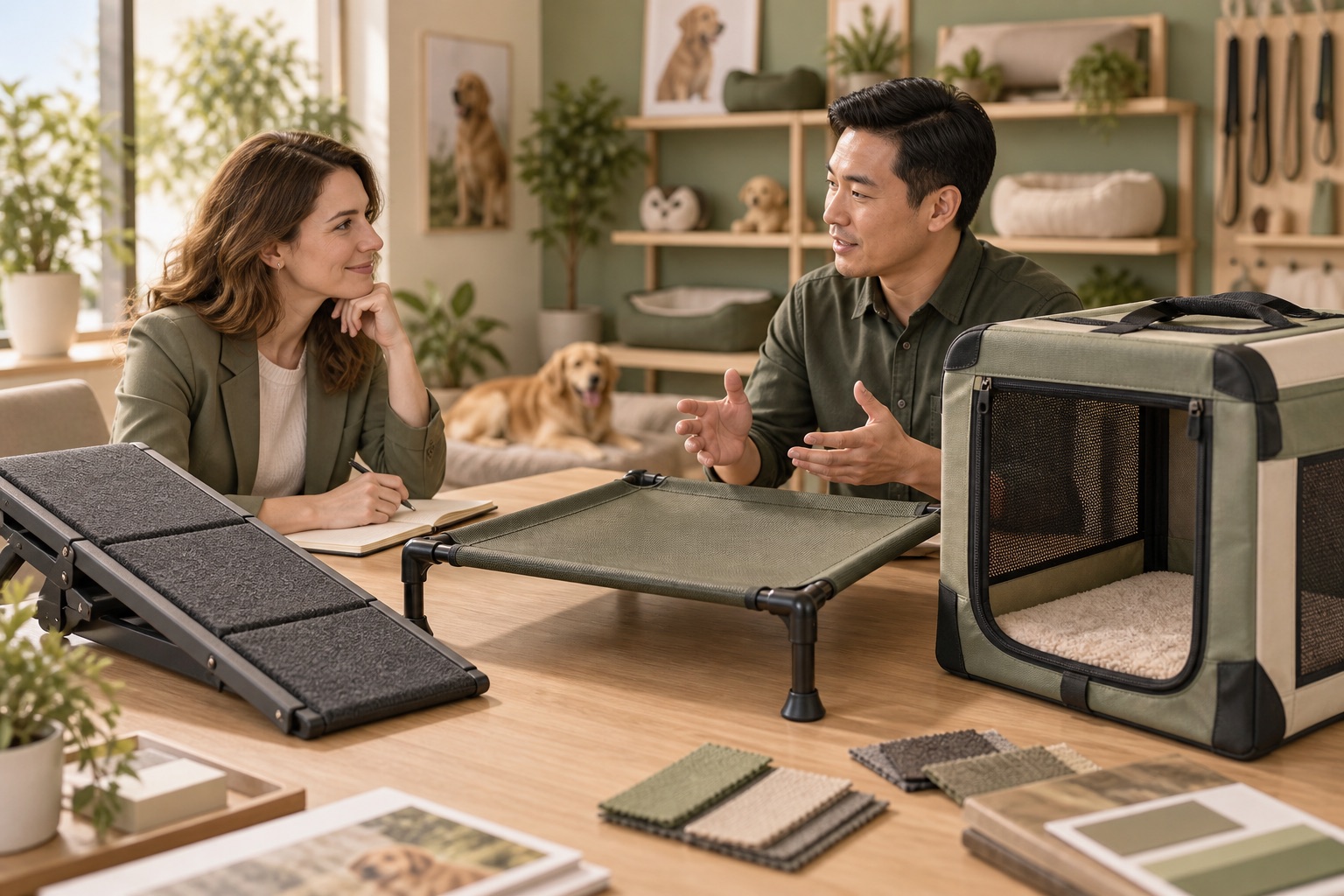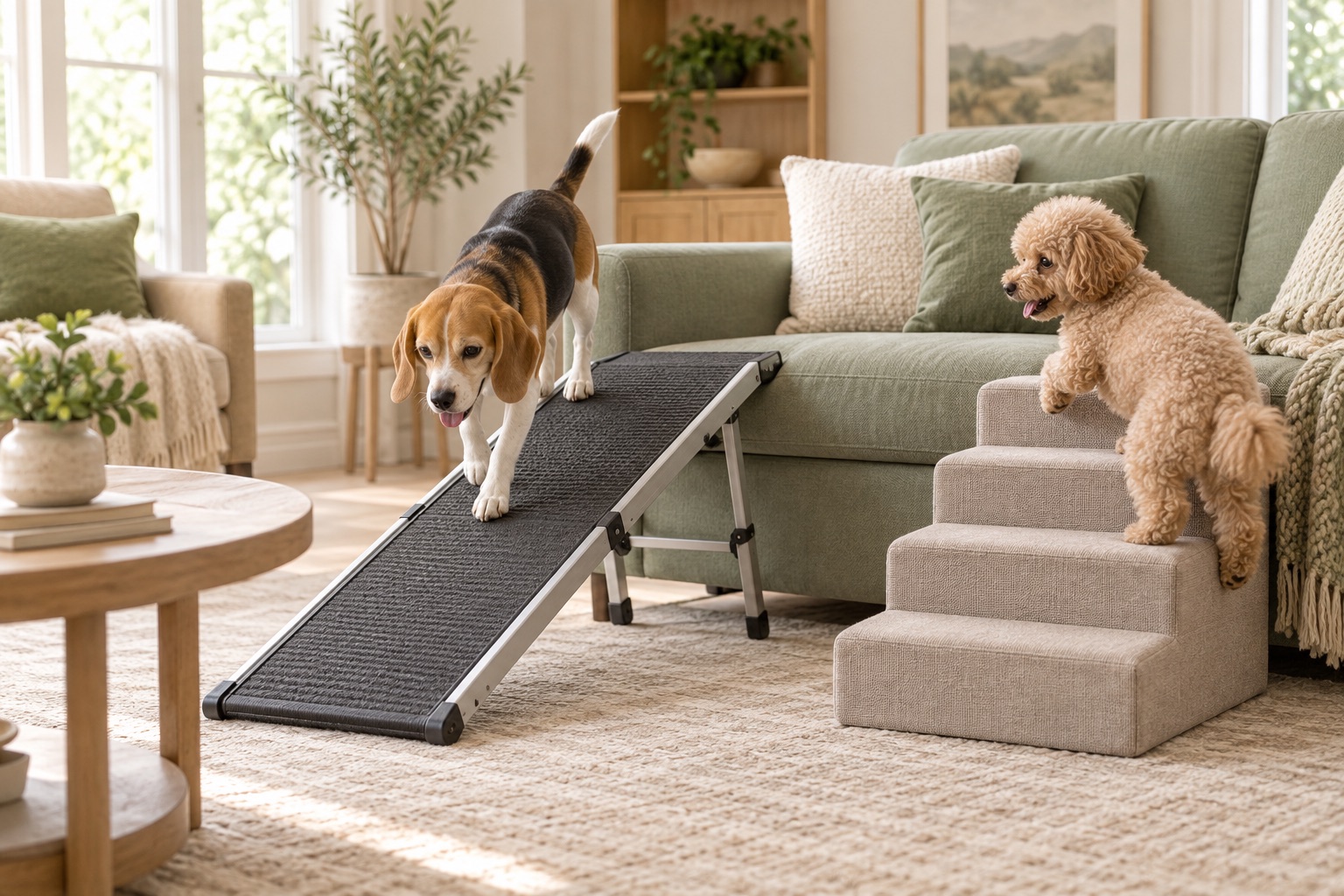
Stairs or ramps is the first question every mobility buyer asks, and the honest answer is 'both, for different dogs'. They are not competing products; they are two tools with different physics. This article compares them at the spec level — the level your customers will eventually feel — and then lays out how the two families share a shelf.
The physics: slope versus repetition
A ramp trades footprint for gentleness. A 190 cm ramp like our foldable dog ramp 2501 reaches a 60 cm sofa at a shallow angle, which suits long-backed breeds, senior dogs and post-surgery recovery — the lower the slope, the less spinal and joint load per ascent. A stair trades gentleness for footprint: a four-step unit like the four-step foldable pet stair 777 fits beside a bed in centimetres, and dogs under 20 kg climb steps readily. The buyer's decision is usually spatial (is there 190 cm of floor run?) before it is medical.
The four specs that decide quality
- Load rating: fabric stairs typically rate 60 kg, aluminum frames 70 kg — our aluminum foldable pet stair 778n and its reinforced siblings publish per-model numbers; suppliers who do not are asking you to run the test
- Tread surface: sandpaper-style grip for ramps, carpet or grass tread for stairs; wet-paw performance separates the good ones
- Slope (ramps): against a 60 cm height, a 190 cm platform is comfortable; shorter ramps steepen fast — put the math on the box
- Step rise and depth (stairs): rise near 15-17 cm and deep treads keep small and senior dogs confident
Construction family matters as much as the four specs. Fabric-and-board stairs win on weight and price and serve small-to-medium dogs; aluminum frames — like our wide aluminum models — win on rigidity and the 70 kg class, which is where large-breed owners end up. The senior support variant with a hand rail exists because returns data says confidence, not strength, is the binding constraint for older dogs: see the support foldable pet stair 777b. For car travel, the foldable car pet ramp 2401 is its own subcategory — boot geometry and hatch clearance drive the design.
Stocking both: a shelf plan
Retailers who stock one family leave the other's margin on the table. A compact shared plan: one car ramp (the 190 cm class), one telescopic ramp for adjustable heights like our telescopic pet ramp 2509, one fabric stair in the four-step class, one aluminum stair for the large-breed buyer, and one combo unit — the sofa pet stair with bed 2503 — which converts the 'no room' objection into a two-product solution. That five-SKU mobility wall covers small dogs to large, budget to premium, home to highway, in roughly one pallet of folded volume. The category page for ramps and stairs shows the full 19-model spread if you want to ladder deeper.
The customer conversation each family wins
Merchandising improves when you script the two families differently. Ramps win the vehicle conversation: a customer with an SUV and a stiff-hipped lab does not need persuading that jumping is the problem — they need to believe the ramp will hold, grip and fold. That is why car ramp pages lead with load rating, walk-surface grip and folded footprint, and why the demo video belongs on your listing, not in the box. Stairs win the furniture conversation: the customer protecting a dachshund's back cares about step rise, tread depth and whether the unit matches the sofa it stands beside.
- Car ramp listings: lead with kg rating, platform width and boot geometry; show the fold with one hand
- Home stair listings: lead with step count and total height cleared; show the rise measurement against a real bed
- Senior variants: show the support rail in use — confidence sells to the owner, not the dog
- Both: publish the slope or rise math on the box; the retailer who educates wins the category
The takeaway
Ramps sell to the geometry of the home; stairs sell to the confidence of the dog. Publish the slope and the step-rise math, keep load ratings honest at 60 and 70 kg classes, and stock one hero from each family plus a combo. Mobility is a specification category — the retailers who win it treat it that way, and the factories who win it publish the numbers first.