When a dog starts hesitating before jumping into the car or onto the sofa, that is usually the first visible sign of joint stress. For pet brands and retailers, senior-dog mobility is one of the most dependable growing segments — and ramps are the product most buyers start with. They are also one of the easiest categories to get wrong: nearly every return and one-star review in this category traces back to three specifications that can be written down before you order.
1. Start from the use case, not the product
Vehicle access and furniture access need completely different dimensions, and the mistake buyers make most often is stocking a single length for both. Vehicle ramps have to be long, because the rise is fixed by the tailgate or boot height and the only variable you control is the run. Indoor steps are the opposite: the height is set by the sofa or bed, and floor space is what you are short of.
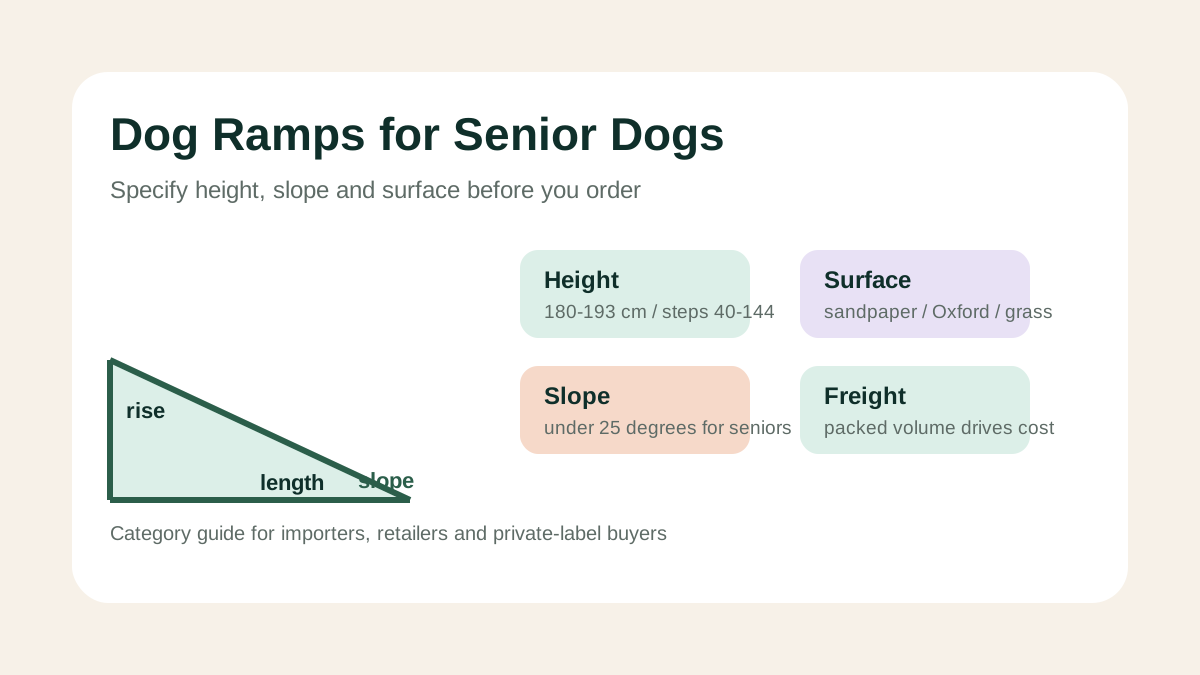
- Vehicle and SUV access: ramps in the 180-193 cm range. Our foldable ramp (model 2501) and car ramp (2401) are both 190 cm long; the telescopic ramp (2509) covers 181 cm in M and 193.5 cm in L, so one model serves two vehicle heights.
- Sofa and bed access: step-style products, measured by height and footprint rather than length — compact stairs around 40 cm, four- to six-step stairs reaching 92-144 cm of run depending on step count and width.
- Mixed programmes: a modular ramp that combines 160/170/180 cm lengths with 44 or 50 cm widths lets a single SKU cover several use cases, which is usually the cheapest way to test a market.
Retailers who stock both a long vehicle ramp and a compact stair set tend to see the stairs drive repeat purchases from the same customer — the ramp solves the car, the steps solve the bedroom, and the second purchase usually happens within a season. If you are building the line rather than a single hero SKU, review the full ramp and stair range first and plan the two lengths together.
2. Slope: turn an opinion into a number
The most common reason a dog refuses a ramp is not temperament — it is steepness. Slope is arithmetic rather than taste: it depends on the rise you have to clear and the length you buy, and both numbers belong on your specification sheet.
Slope angle ≈ arcsin(rise ÷ ramp length). A 190 cm ramp reaching a 60 cm tailgate sits near 18°; the same rise on a 125 cm ramp is close to 29° — a completely different product to a senior dog.
Two working rules from our own sample testing: under about 25° is comfortable for most senior and medium breeds, and anything past 30° is realistically only used by healthy, confident dogs. If your customers serve older or heavier dogs, buy length or extra steps rather than accepting a steeper angle — and write the intended rise into the spec sheet, because the same ramp behaves very differently against an SUV tailgate and a low bed.
3. Surface: the feature that decides whether it gets used
Anti-slip performance is where cheap ramps fail, and it is the easiest thing to hide in a sample photograph. Compare at least three surface constructions side by side, on the floor, with a real dog rather than a hand:
- Sandpaper or anti-slip board (aluminium ramp 2501): durable, wipes clean, and the default for vehicle use where muddy paws are routine.
- 1680D or 1200D PVC Oxford with PVC drip moulding (steel-frame stairs): firm under the paw, holds its shape, and survives repeated folding better than soft covers.
- Artificial grass (PE+PP) over plywood and pearl cotton (grass stair models): the highest grip confidence for nervous and senior dogs, at the cost of harder cleaning — as much a regional preference as a technical one.
- EVA anti-slip mats and side rails: worth specifying whenever the ramp is used on a vehicle, where the whole assembly shifts during entry.
Order one sample of each tread style before you fix a default for your market. Owner preference on surface differs noticeably between regions, and it is a far cheaper experiment than a container of the wrong covering.
4. Weight, folding and packed volume: two bills in one decision
A human being is the one lifting this product in and out of a car, so weight decides your reviews — and packed volume decides your freight. They are the same design decision, and they are worth reading off the spec sheet together.
- A 190 cm aluminium folding ramp packs to 59 × 10 × 46.5 cm — flat enough to move as a normal carton rather than attracting a bulky-goods surcharge.
- A 125 cm folding ramp packs to 63 × 41 × 8.2 cm, and the telescopic ramp's M size folds to 35 × 40.8 × 12.3 cm — an extendable design is a freight decision as much as a convenience one.
- Folding stairs typically pack at 49-52 cm on the longest side, one piece per carton, which makes them easy to bundle with a bed or crate programme.
The practical consequence: two ramps with the same FOB price can land at materially different costs once freight is included, because pet products are bulky relative to their value. Insist on packed dimensions and carton quantity in the quotation itself, not after production starts.
5. What to confirm in writing before a bulk order
Six items, all of which a competent supplier answers in an email rather than a meeting. The first and the last are the two most often skipped, and the two that cost the most when they go wrong.
- Load rating per size, with the test method — not a line like 'suitable for large dogs'. Our aluminium stair and modular ramp models are rated to 70 kg; whatever you buy, get the equivalent number and method in writing.
- Packed dimensions and carton quantity, quoted before you commit, so an FOB price can be converted into a landed cost.
- Sample terms: expect a sample fee plus a sample courier fee, with samples ready in 7-10 days.
- MOQ per model and per colour — typically 100-200 pieces for catalogue models in standard colours.
- Production lead time: 30-45 days after sample approval, longer for custom colours in peak season.
- Design protection: several models in our range carry registered design rights in China, the US and Germany. Confirm which markets a design is protected in before you list it — losing a listing to an infringement claim costs more than the margin on the whole order.
For the first item, the ramp section of our quality standards article sets out exactly what to test and what good looks like: mid-span loading, hinge cycling and surface slip, each with an acceptance criterion you can paste into a purchase order.
The takeaway
Senior-dog mobility is not a sentiment category, it is a specification category. Put the rise and the length on the spec sheet, calculate the slope instead of guessing it, test surfaces with real dogs before choosing a default, and price packed volume into every comparison. Buyers who do those four things see measurably fewer returns and far fewer 'my dog won't use it' reviews — and in this category those two numbers are the profit.