Soft crates are the highest-margin, highest-risk family in the pet category. High margin because a 600-denier shell and clever folding geometry cost less to ship than any hard crate; high risk because two spec points — zippers and frames — decide whether the review average is 4.6 or 3.2. This guide lists the seven specs to negotiate, in the order a factory negotiates them.
Specs 1-3: shell, zipper, frame
Shell denier: 600D is the entry workhorse; 1200D earns its weight on XL sizes and boardy structure — the classic foldable soft pet crate 911 family publishes its size ladder in this fabric class. Zipper: the number-one failure point in the category; specify a branded-grade coil, double pulls on doors, and internal flap protection, then cycle-test on the pre-production sample. Frame: folded steel tube frames give structure; hybrid builds like our foldable wire soft crate 2504 add a wire skeleton for dogs that lean. A frame spec without a joint-cycle number is a promise, not a spec.
Specs 4-7: doors, mats, mesh, fold
- Door configuration: front-only for value tiers; side-door access like the side-door soft pet crate 913 for car travel and vet use
- Interior mat: removable and washable is the review-reading buyer's expectation; fleece lining like the lamb fleece crate 914 carries winter margins
- Mesh panels: visibility calms dogs, but mesh grade decides escape resistance — check the weave against claw testing on the sample
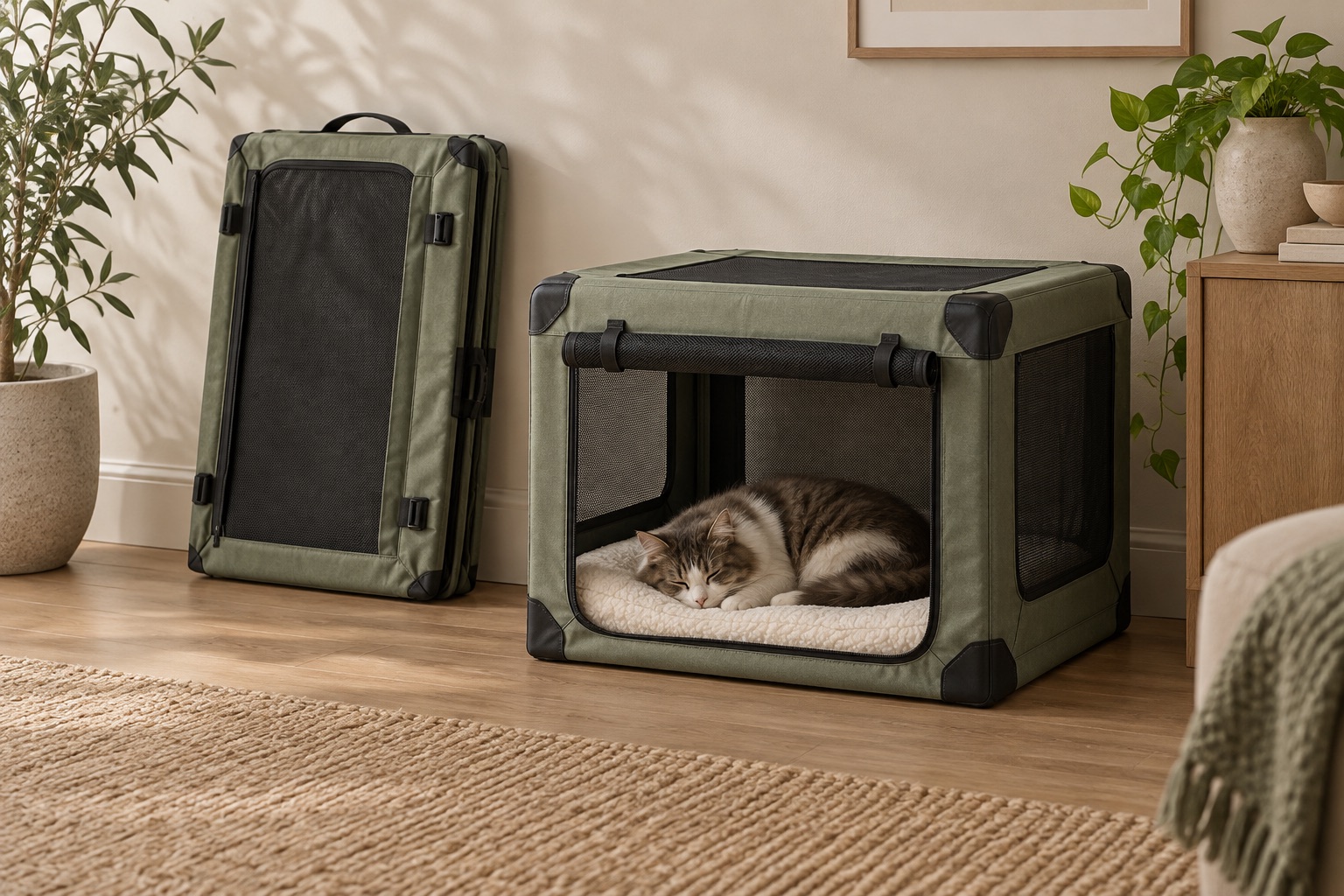
- Fold-flat geometry: the shipping spec — folded thickness under 15 cm keeps a full S-3XL ladder inside one carton stack
The size ladder deserves its own arithmetic. S-3XL spans roughly 49 cm to 102 cm of length, and each step should carry a published weight-and-breed guidance band. Volume lives in M and L; S serves travel and cats; XL-3XL is the large-breed niche where competition thins and returns concentrate if the frame spec was compromised — the oversized foldable soft crate 2513 is the reference for how far the ladder can extend before structure, not demand, becomes the limit. For context on the wider family including playpens, the crates and playpens category page maps the full range.
The carrier overlap
Buyers often fold carriers into the crate program, and they share a supply chain, but the spec conversation changes: carriers add handles, strap ratings and — in wheeled form like our rolling soft pet carrier 2524 — chassis and wheel-cycle specs. If your program includes travel, budget a separate sample round for the carrier; the failure surfaces are different enough that borrowing the crate's approval is false economy. The tents and carriers category shows the travel-specific models.
Testing protocol before the deposit
The seven specs only protect you if they are tested on the sample, and a crate program has a natural five-minute protocol. Set the crate up and fold it flat five times: frame joints should tighten, not loosen, and zippers should not bite the fabric by cycle three. Load the door zipper with a deliberate slow pull at an angle — the failure mode real dogs produce. Press outward on the mesh panels with an open palm: claw-grade weave resists, curtain-grade tents. Sit the empty crate on carpet and hard floor and push sideways: feet and base stability show up immediately. Finally, weigh and measure the folded stack against the spec sheet — packed volume is a contractual number, not a hope.
Photograph the test and attach it to your PPS approval email. The photos do two jobs: they fix the baseline for the pre-shipment inspection, and they signal to the factory that your program inspects what matters. In our experience the factories that welcome the protocol are the ones whose mass production matches the sample — the test is as much a supplier filter as a product check.
Negotiating the program
Structure the first order as one ladder, one brand layer: S-XL of one platform at 300 pieces per size, one packaging system, FBA-ready labeling if e-commerce is in the channel mix — the packaging systems guide covers the carton math. Then let reorder data, not enthusiasm, decide whether 2XL-3XL, the fleece winter variant, or the wire-frame hybrid joins the next container. Crate programs compound because the ladder creates a collection effect; they unravel because a rushed spec ships a return generator. The seven specs above are the whole difference.