Ask an importer where their worst sourcing surprises happened and the answer is rarely 'production'. It is 'the sample looked great, and the container came back wrong'. The sample stage is not a formality before production — it is the contract your shipment will be judged against. Here is the workflow we run with buyers, compressed into a realistic 30-day frame.
Days 1-5: brief, reference and the sample decision
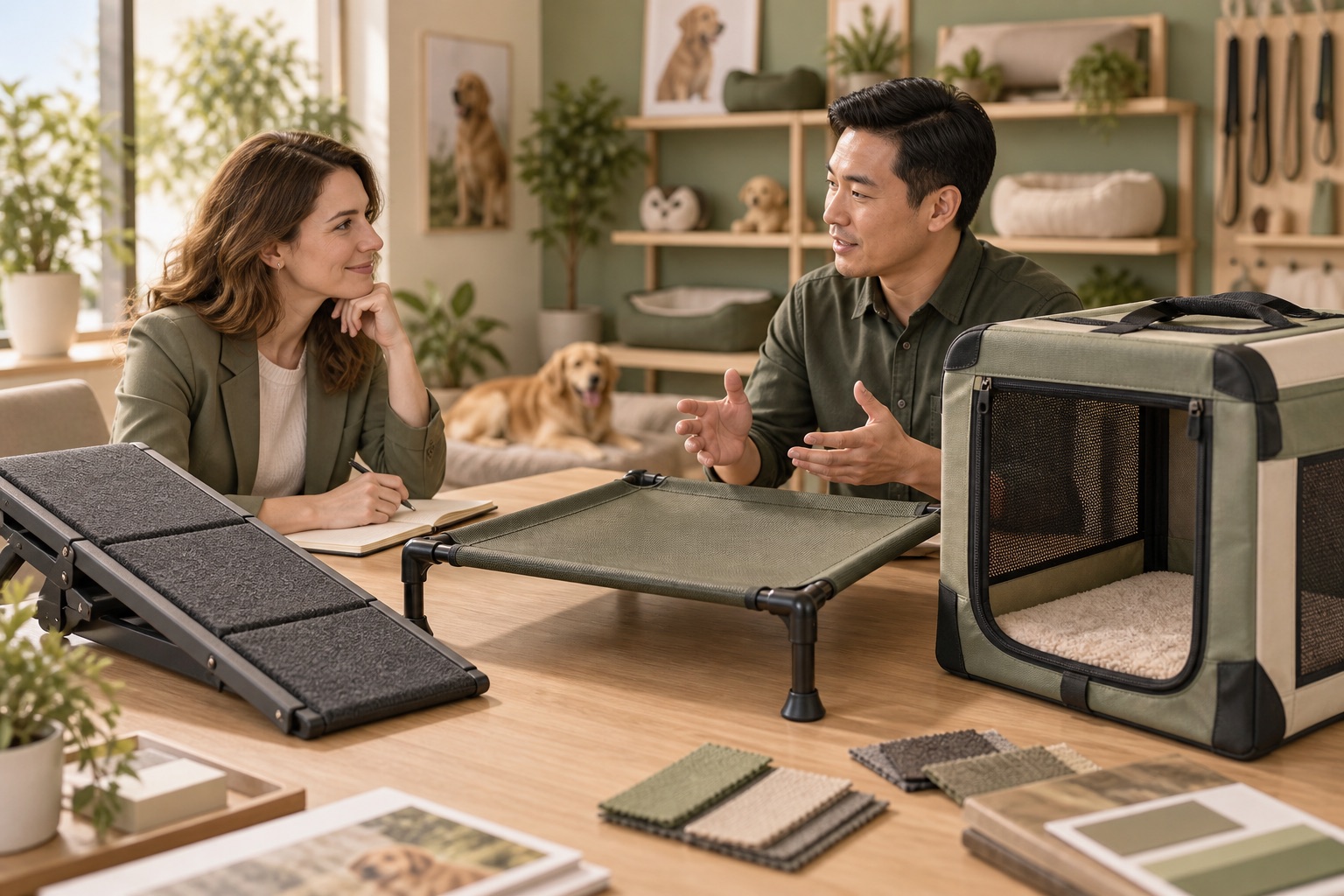
Start with a written brief, not a mood board: category, target retail band, market, and the two or three specs that are non-negotiable — for a stair, step count and load rating; for a cot, fabric and size ladder; for a crate, denier and door count. If an existing catalogue platform fits, sample that platform as the baseline: sampling our classic foldable soft pet crate 911 tells you more about a factory's craft than any custom mockup, because the spec is already public and checkable. Custom prototypes are for when the brief genuinely has no platform — the ODM case described in our OEM/ODM guide.
Days 6-15: first sample round
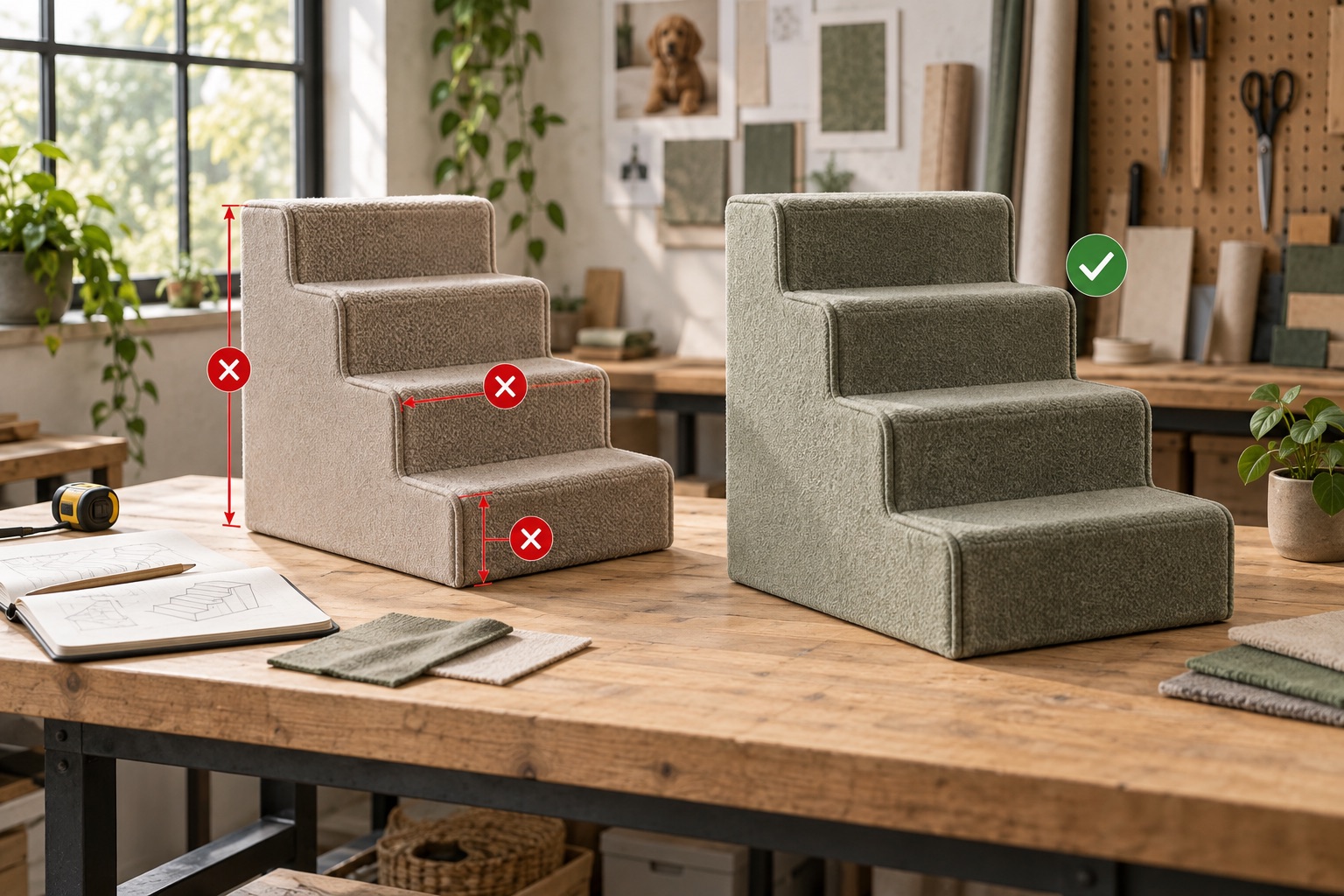
The first physical sample arrives in 7-10 days for catalogue-platform programs. Judge it against the spec sheet, not against hope: measure dimensions against the published numbers, weigh the fabric claim, cycle the zippers, sit the frame on an uneven floor. Write findings as a numbered list — 'sample vs spec' — and send it back in one consolidated email. Fragmented feedback produces fragmented revisions and quietly resets everyone's clock. This is also the moment to approve the customization layer: logo method, colors, packaging dieline. A sample approved without the packaging approved is half an approval.
Days 16-22: the pre-production sample
The pre-production sample (PPS) is the sample most buyers skip and every program needs. Unlike the prototype, the PPS is made from mass-production materials on mass-production settings — the same textilene roll batch, the same buckle lot, the same carton run that your container will carry. Its job is to catch the gap between 'sample made carefully by hand' and 'product made by the line'. In our workflow the PPS locks every customization before the line starts, which is why our lead-time clock starts at PPS approval, not at first contact: 30-45 days of production only means something if everyone agrees on what is being produced.
Days 23-30: approval documents and green light
Mass production starts against four documents, not against a handshake: the signed spec sheet, the PPS approval email with your numbered confirmation, the packaging artwork sign-off, and the inspection plan (which gates release balance payment — the mechanism our quality process guide explains from the buyer's chair). With those four in place, the 30-45 day production window becomes measurable, and the pre-shipment photo report becomes a confirmation rather than a negotiation.
Where the 30-day plan breaks — and how to keep it
- Fragmented feedback: consolidate revisions into one numbered list per round
- Mystery-shop sampling: sample the actual platform you will order, with your actual customization
- Silent packaging: approve artwork alongside the product, never after
- Skipping the PPS: if the factory resists a pre-production sample, you have learned something important
- Verbal approvals: if it is not in an email, it is not approved
The four documents, in full
Because the approval package is what production actually obeys, it is worth listing what each document must contain. The spec sheet: every dimension, material, weight and color stated per model, with tolerances where measurement matters — this is the document the incoming-materials gate checks against. The PPS approval email: your numbered confirmation referencing the physical sample in your hands, plus any approved deviations from the original spec. The artwork sign-off: packaging dielines, label placement and barcode mapping, approved on a physical print, not a screen. The inspection plan: which gates run, what evidence each produces, and which evidence releases the balance payment.
Buyers sometimes resist the paperwork as friction. The reframe that helps: these four documents are the cheapest insurance in the entire import chain, and they cost nothing but discipline to produce. Every dispute we have seen buyers describe — wrong fabric, missing label, weak carton — was, at root, a missing line in one of these four documents. Suppliers who volunteer the structure are telling you they have lived the alternative.
The takeaway
Thirty days from brief to production green light is realistic for platform-based programs: five days to brief, ten for the sample round, a week for the PPS, a week for documents. The discipline is not bureaucratic — it is the difference between a shipment that matches the sample and a sample that was pretending to be a shipment. Suppliers who insist on the PPS are protecting you; test that insistence early, on a small order like our 300-piece ramps or beds, and keep the partners who pass.