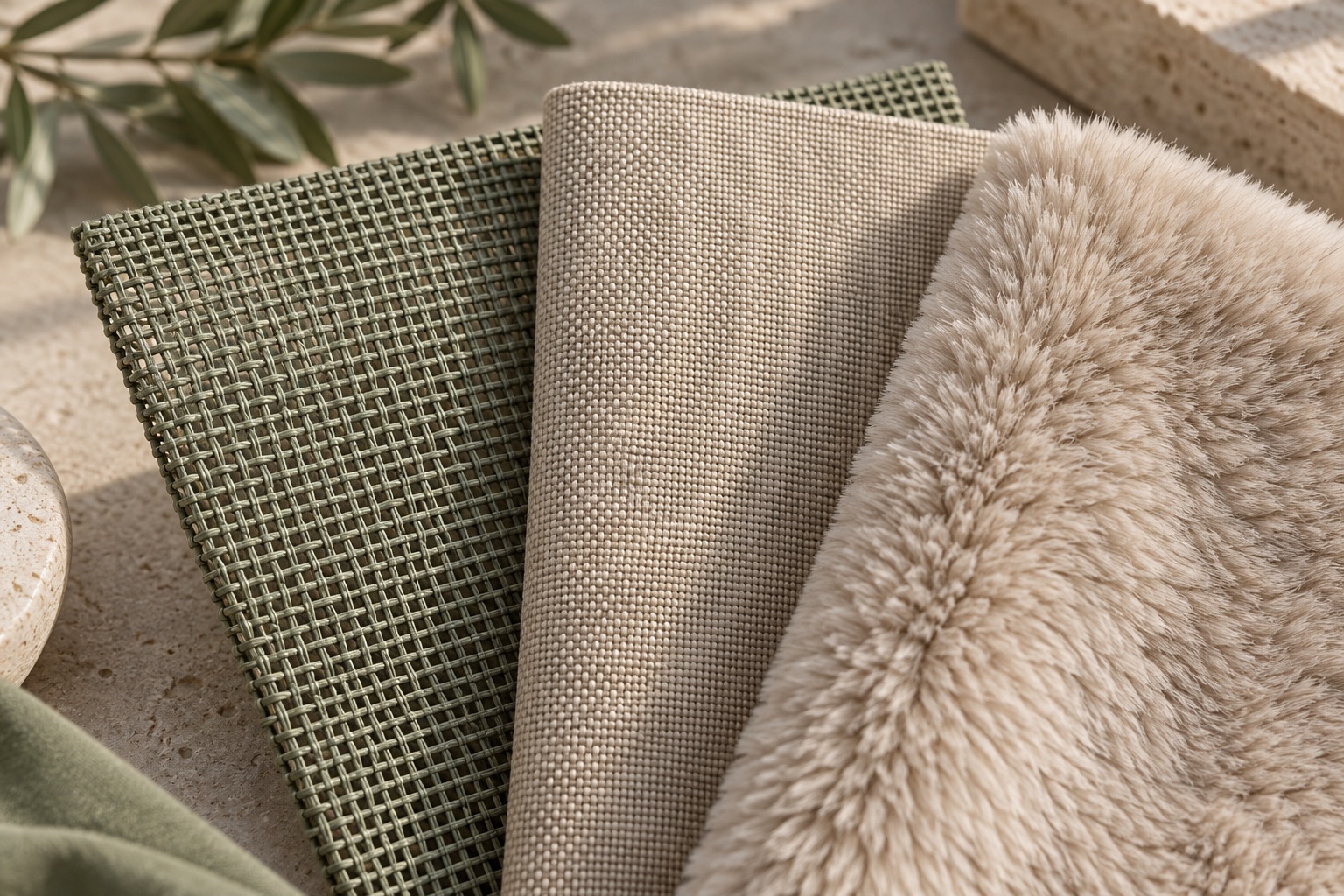
Every elevated cot is the same idea — a breathable surface held off the ground by a frame — and the fabric is where the idea becomes a product. Choose the wrong textile for your climate or channel and the model returns itself; choose right and one SKU family pays for the container. Here is the material map we hand buyers, drawn from the 25-bed family in our elevated beds category.
Textilene: the outdoor workhorse
Textilene — a woven PVC-coated polyester — is the default for hot-climate and outdoor shelves. It breathes through the weave, sheds water, cleans with a hose, and holds color under UV better than coated alternatives. The trade-offs are feel (firm, not cozy) and repairability (a torn panel means a fabric replacement, not a patch). It is the surface on our textilene elevated pet cot 2300 and the large textilene elevated cot 2206 for XL breeds — the models that anchor summer programs in sun-belt markets. Stock textilene when your buyer's dog lives outdoors more than on the sofa.
Oxford: the all-season all-rounder
Oxford fabric — coated woven polyester measured in denier — balances toughness, softness and printability. It is the canvas for canopy cots like our canopy elevated pet cot 2506 and canopy oxford cot 2300P, and it takes Pantone color well, which makes it the private-label favourite: your brand color actually looks like your brand color. It is less breathable than textilene in peak heat and less plush than fleece in winter, which is exactly why it is the middle-shelf workhorse across seasons.
Mesh and plush: the two ends of the indoor shelf
Soft mesh is the indoor-breathability play — cooler contact, lighter weight, gentler price — ideal for starter price points and cat cots like our folding cat cot MC03. Plush and faux fur sit at the other pole: warmth, texture and gifting energy, as on the faux fur nest bed 2518. Neither is an outdoor fabric — plush mats and dries badly, and mesh's light deniers scuff on patios. Their job is the indoor impulse purchase and the winter gift shelf, where they convert on touch.
Choosing by program, not by fabric enthusiasm
- Sun-belt or outdoor channel: textilene in S-XL, canopy variant as the margin SKU
- Four-season general retail: oxford core range, Pantone-matched, one canopy model for summer
- Value tier and cat aisles: soft mesh cots, priced to move on pegs and end caps
- Gifting and winter: plush nest beds and cushioned platforms like the cushioned elevated pet bed ZT01, boxed to be given
Two spec notes that travel with any fabric choice. First, fabric weight is a feel-it-in-person spec — the pre-production sample exists precisely so you can judge denier and weave with your hands before the line runs. Second, washing drives returns in indoor fabrics: removable, washable covers on cushioned models are a standard customization and worth specifying on the sample, as our OEM vs ODM guide discusses for the customization track.
Frame spec: the quiet half of the cot
Fabric gets the attention, but the frame decides whether the fabric's promise survives a year. Three frame variables matter to buyers. Tube gauge: heavier wall thickness resists the 'sag' reviews that plague cheap cots, at a modest unit-cost increase that the premium shelf easily absorbs. Coating: powder-coated steel resists scratched-rust returns, especially for outdoor SKUs that live on patios. Joint design: pushed-fit versus bolted assemblies change both the customer's assembly experience and the carton size — pushed-fit wins unboxing, bolted wins flat-pack freight. A cot program that specs fabric carefully and frame carelessly optimizes the review it will get and ships the review it deserves.
Frame and fabric choices also interact at the weight-rating line: the same textilene panel rates differently on a 25 mm versus 19 mm tube, which is why our spec sheets state rating and frame together — the 60-70 kg class on the aluminum-supported models, and honest breed-weight bands on the steel-and-fabric lines. When you compare quotes across factories, insist on that pairing; a fabric spec without a frame rating is half a spec.
The takeaway
Textilene for heat, oxford for seasons, mesh for entry price, plush for gifts — four fabrics, four different jobs, one frame system. A first order runs best as one fabric in three sizes plus one contrast model for the margin shelf. Whatever the mix, judge the fabric on a physical sample and publish the care instructions on the box: the cheapest returns policy is a fabric chosen correctly the first time.