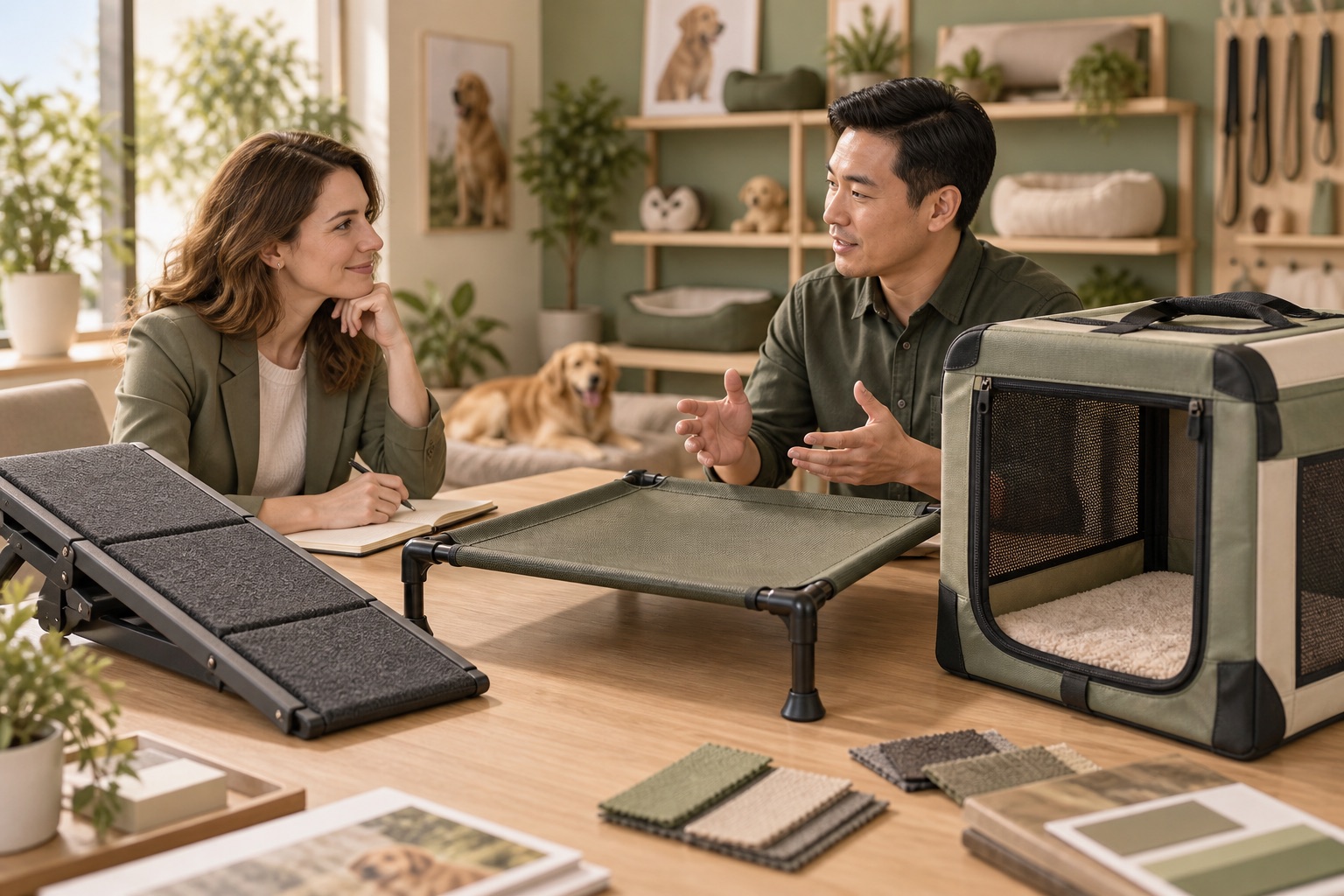
Cat is the quiet growth engine of the pet aisle. Dog categories get the floor space; cat categories get the repeat purchase — smaller tickets, faster refresh cycles, and buyers who own multiple units per household. For wholesale buyers, 2026's cat furniture story is less about novelty and more about three structural shifts. Here is what is moving and what to stock.
Trend 1: the house aesthetic goes mainstream
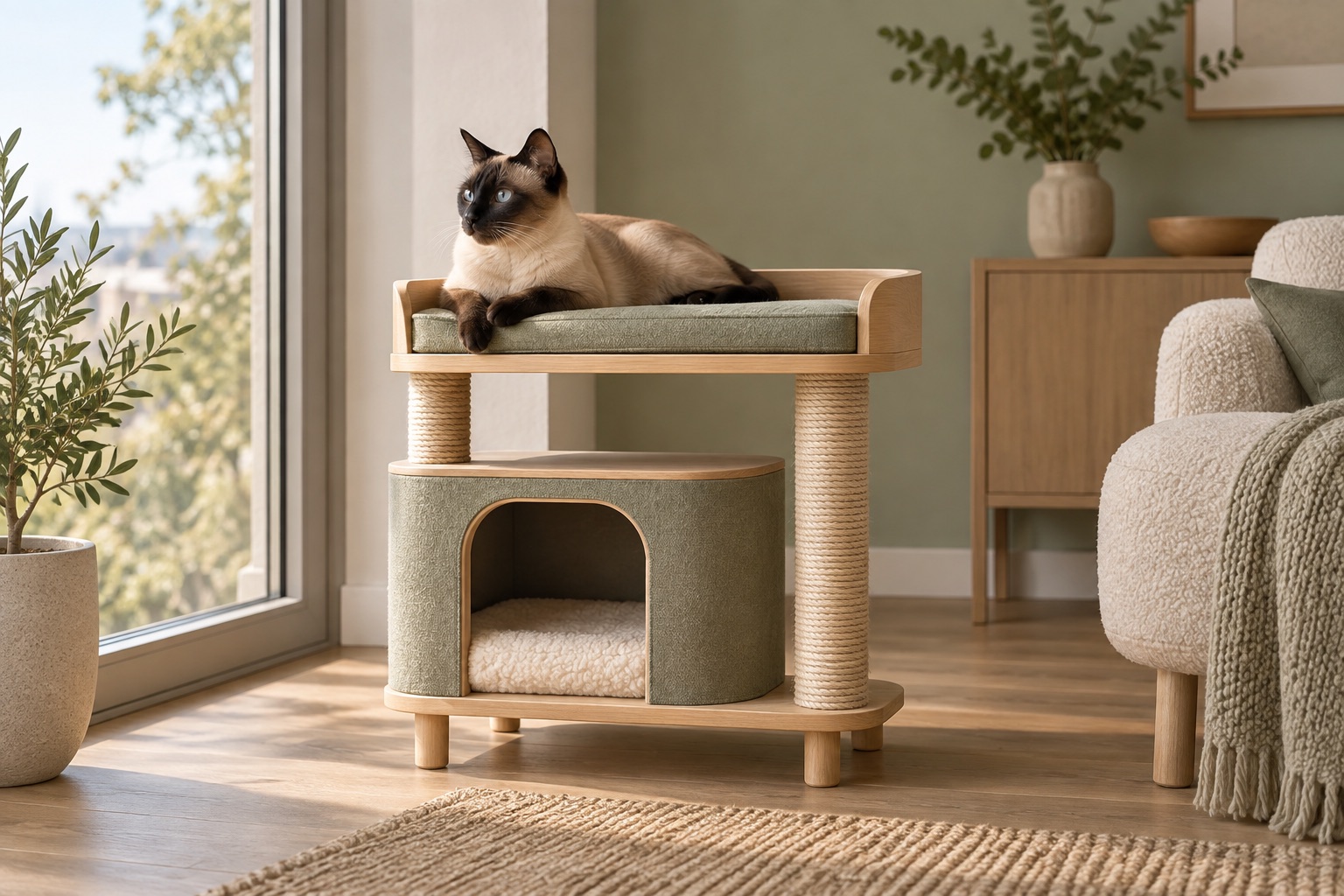
Cat furniture used to be carpet-covered towers; the modern buyer wants furniture that photographs like the living room it sits in. House-shaped enclosures, muted palettes and clean lines are the growth face of the category — our foldable pet house MC2305 and the two-level house pet bed 2519 trade directly on that aesthetic while keeping flat-pack logistics. The lesson for private label buyers: the shape sells the click, the fabric sells the review, and neither needs exotic materials — just disciplined colorways and a fabric that survives claws.
Trend 2: washable everything
Multi-cat households are the category's core buyers, and their first question is cleaning. Removable, washable covers moved from differentiator to expectation across plush and cushioned models — the same expectation documented in our elevated-bed materials guide, applied with double force in cat. Factories that engineer the zip and the cover seam properly (and prove it on the pre-production sample) turn 'washable' from a claim into a review; factories that fake it turn it into a return.
Trend 3: small-space and rental living
Urbanization keeps shrinking the customer's floor plan, and cat products are uniquely suited to answer: vertical footprint instead of floor footprint, fold-flat storage for renters, and lighter structures that do not demand wall anchoring deposits. Compact cots — the folding cat cot MC03 class — and two-level designs that stack sleeping and play into one footprint are the quiet volume winners. Retailers who merchandise cat as 'apartment equipment' rather than 'pet toy' are pricing against furniture budgets instead of toy budgets, which is where the margin lives.
What does not sell: lessons from the aisle
Knowing the misses saves as much cash as knowing the trends. Oversized carpet towers keep losing shelf to compact house furniture — floor footprint is the enemy and 1990s carpet is the aesthetic enemy. Novelty shapes without washable surfaces spike on social and die on returns: a cute pod that cannot be cleaned is a one-season SKU with a review trail. And unbranded generic beige everything underperforms even a modest two-palette color system, because the cat buyer's apartment has a palette too. The category rewards restraint: fewer SKUs, cleaner fabrics, honest dimensions, washable covers.
For wholesale buyers the 2026 playbook is therefore compact: anchor on one house-aesthetic platform, one washable plush, one compact cot and one travel crossover, all specified in centimetres and all at a 300-piece MOQ. Sample the fabrics physically, lock the colorways for the season, and let the fast refresh cycle work — cat buyers who win once reorder within the same fiscal year, which is the quiet reason the category compounds.
A 2026 cat program that respects cash
- One house-aesthetic anchor: a two-level or house-style bed at 300 pieces — the shelf hero
- One washable plush model: gifting and winter energy, review magnet
- One compact cot: price-point entry and small-space merchandising
- Colorway discipline: two palettes maximum per season, Pantone-matched — cat buyers reward coherence
- One carrier crossover from the travel family for vet-visit frequency — cat owners travel with carriers far more often than to campsites
The cat buyer also forgives less ambiguity: dimensions are read in centimetres, weight limits are checked against actual cats, and 'fits most cats' fits no one. Publish the numbers — the same spec discipline our category guides apply to ramps and crates — and the category's fast refresh cycle compounds in your favour with every accurate listing.