Suppliers use OEM, ODM and private label as if they were synonyms, and buyers inherit the confusion at the worst possible moment — the quotation. The three tracks differ in who owns the design, where the risk sits, and what your first order actually pays for. Here is the map, drawn on pet products specifically.
OEM: your brand on a proven platform
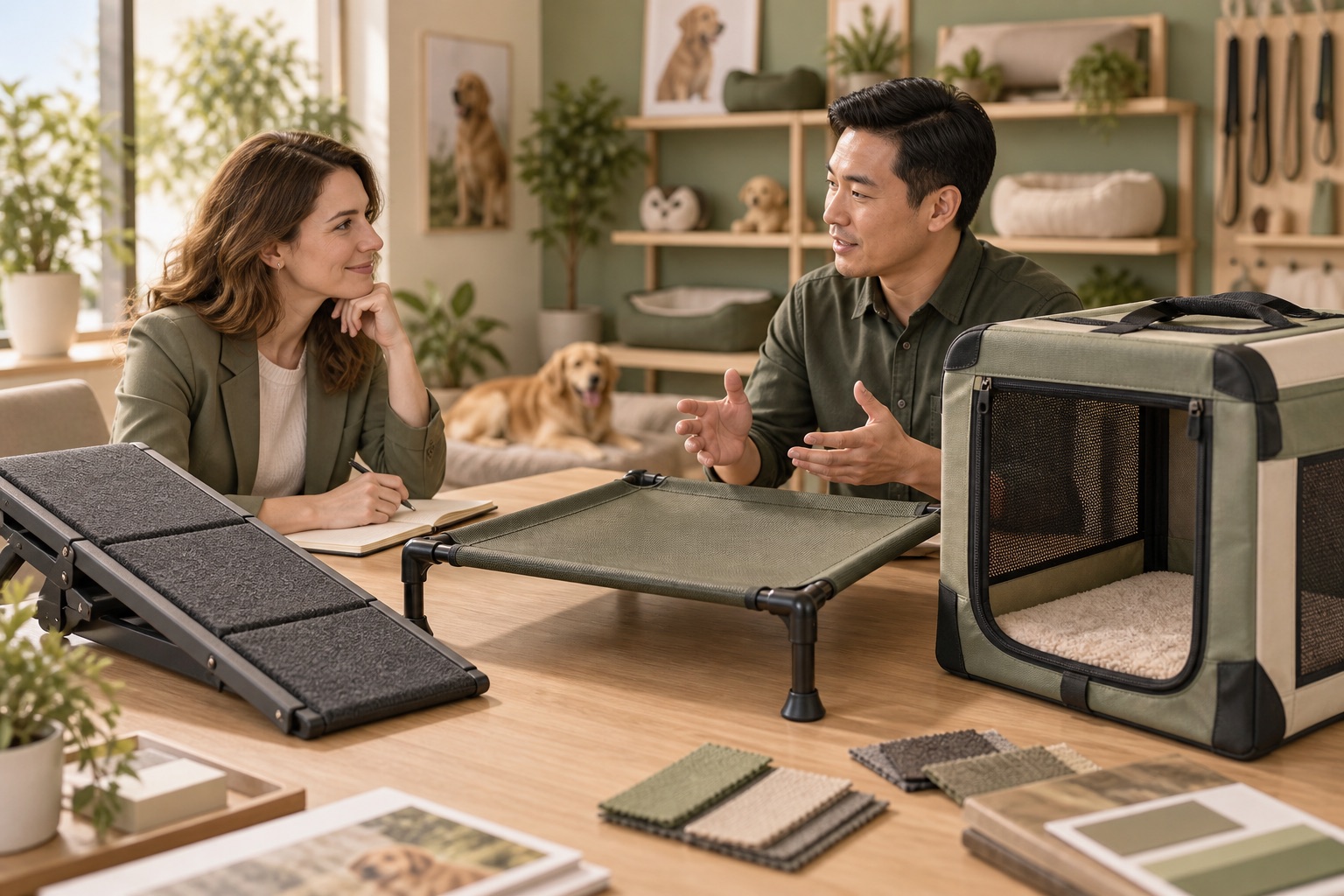
Original Equipment Manufacturing means the factory's existing product carries your branding. You choose from a catalogue — say, a foldable dog ramp or a textilene raised cot — and customize the brand layer: logo method, colors within the fabric program, packaging. Engineering risk is near zero because the platform already ships; MOQ stays at the factory baseline (300 pcs per model in our range); lead time stays in the standard 30-45 day window. OEM is the right answer for your first program with a new supplier, and for any SKU where speed-to-shelf beats differentiation.
ODM: the factory engineers from your brief
Original Design Manufacturing flips the origin: you bring sketches, a target sample or a written brief, and the factory's engineering turns it into a product. In pet products this is how market-specific geometry happens — a stair pitch for a market where beds run higher, a carrier frame for a new vehicle norm, a cot size ladder for a breed-heavy market. ODM costs more up front (development and tooling), runs longer (sample iterations before the 30-45 day production clock), and needs the tooling-ownership question answered in writing. The payoff is a product competitors cannot reorder from the same catalogue page. Our services page describes the ODM track end to end, including where the pre-production sample locks every spec.
Private label: a program, not a product
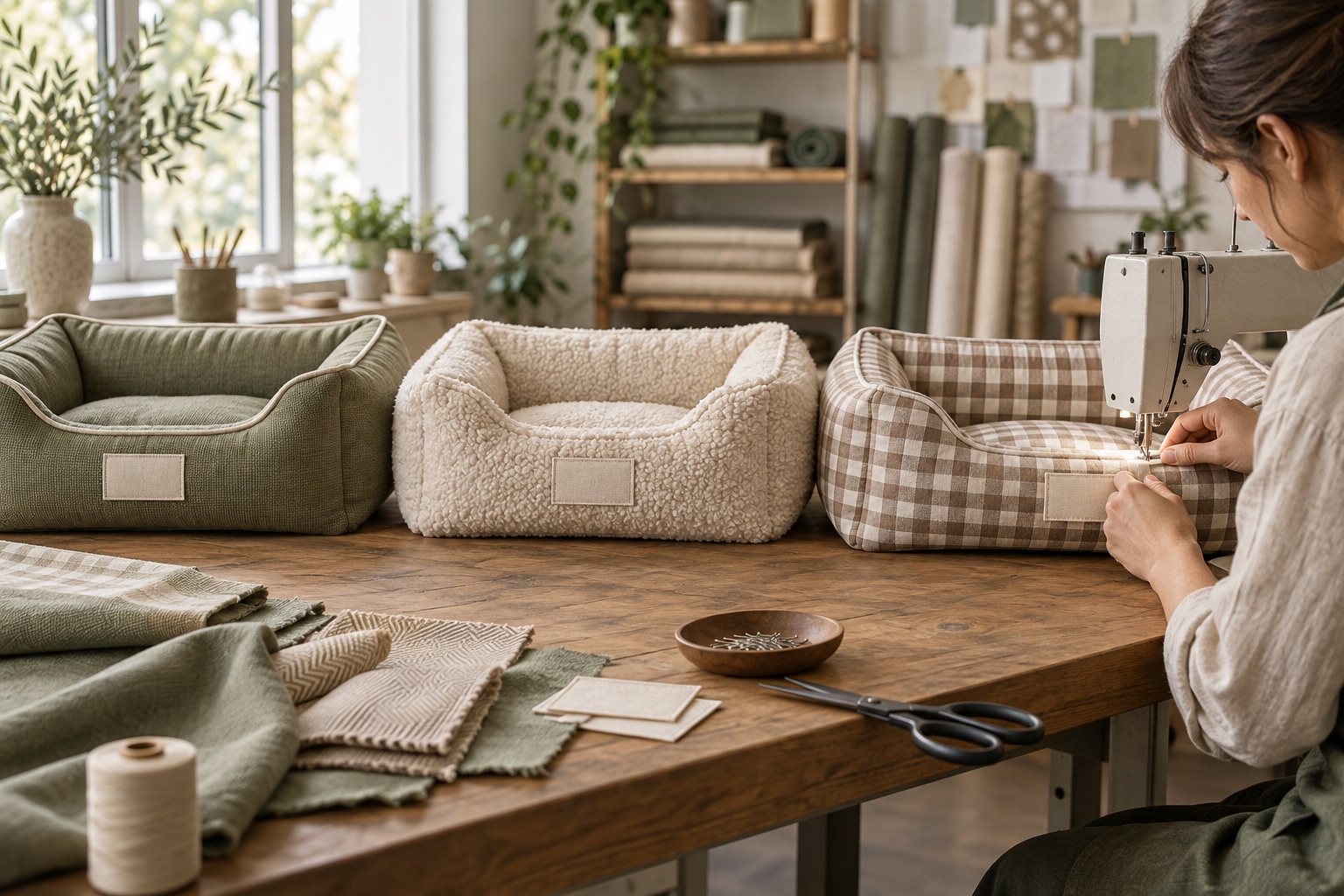
Private label is the retail term for a coherent branded range built on OEM platforms — one brand layer across several SKUs, one packaging system, one quality story. It is less a manufacturing mode than a program discipline: 3-5 SKUs at 300 pieces each, mixed into one container, unified under your brand. The failure mode is inconsistency — a range whose crates look premium and whose beds look orphaned — which is why private label belongs with a supplier whose catalogue breadth can carry the whole range under one QC workflow, as our private label program page lays out.
How to choose
- New supplier, first order: OEM — prove the sample-to-shipment discipline before you invest in design
- Established line, seasonal refresh: OEM with deeper customization — colors and prints move the shelf without moving tooling
- Differentiated hero SKU: ODM — spend the development budget where competition cannot follow
- Retail or chain program: private label structure over OEM platforms, with one brand layer across families
The tracks also mix. A common sequence: launch private label on OEM beds and crates, then add one ODM hero product — a support-rail senior stair or a travel carrier with new geometry — once reorder data tells you where demand concentrates. Buyers who jump straight to ODM everywhere usually discover that half their development budget solved problems their customers did not have.
Cost anatomy of the three tracks
Budgets read differently per track. OEM carries no development cost: your spend is the product at the 300-piece MOQ, the sample fee, and whatever the brand layer costs — a woven label and packaging print. ODM front-loads engineering: prototype iterations, possibly tooling, and a longer approval runway before the production clock starts; the unit economics afterwards can be better, because a design built for your market prices against differentiation, not against a catalogue neighbour. Private label's cost is coherence: one brand layer applied consistently across SKUs, which is mostly design-system discipline rather than factory cost.
- OEM first order: goods + sample + modest branding — the fastest path to sellable inventory
- ODM hero SKU: development budget + tooling + longer timeline — fund it from a working OEM line, not from hope
- Private label program: branding and packaging consistency across 3-5 OEM SKUs — one container, one brand story
- All three tracks share the same quality gates: spec sheet, pre-production sample, three-gate inspection
The takeaway
OEM buys speed, ODM buys differentiation, private label buys shelf coherence — and the disciplined buyers use all three in sequence rather than choosing one forever. Whatever the track, the quality mechanics are identical: spec sheet, pre-production sample, three-gate inspection. A supplier who runs those gates the same way for a logo swap and a ground-up development is the supplier you keep.